Outdoor unit
Sits on a base or wall bracket outside. A fan draws air across a coil, and a refrigerant circuit and compressor raise the heat to a useful temperature for your heating water.
Quick answer
An air source heat pump takes warmth from outside air and moves it into your heating and hot water. A surveyor measures every room, a written quotation follows, and the installation takes several days depending on radiator changes, cylinder work and electrical upgrades. You receive commissioning records and an MCS certificate on handover.
An air source heat pump takes heat from the outside air and moves it into your heating and hot water. Here is what is installed in a Scottish home, and what happens from the first survey to the day your system is handed over.
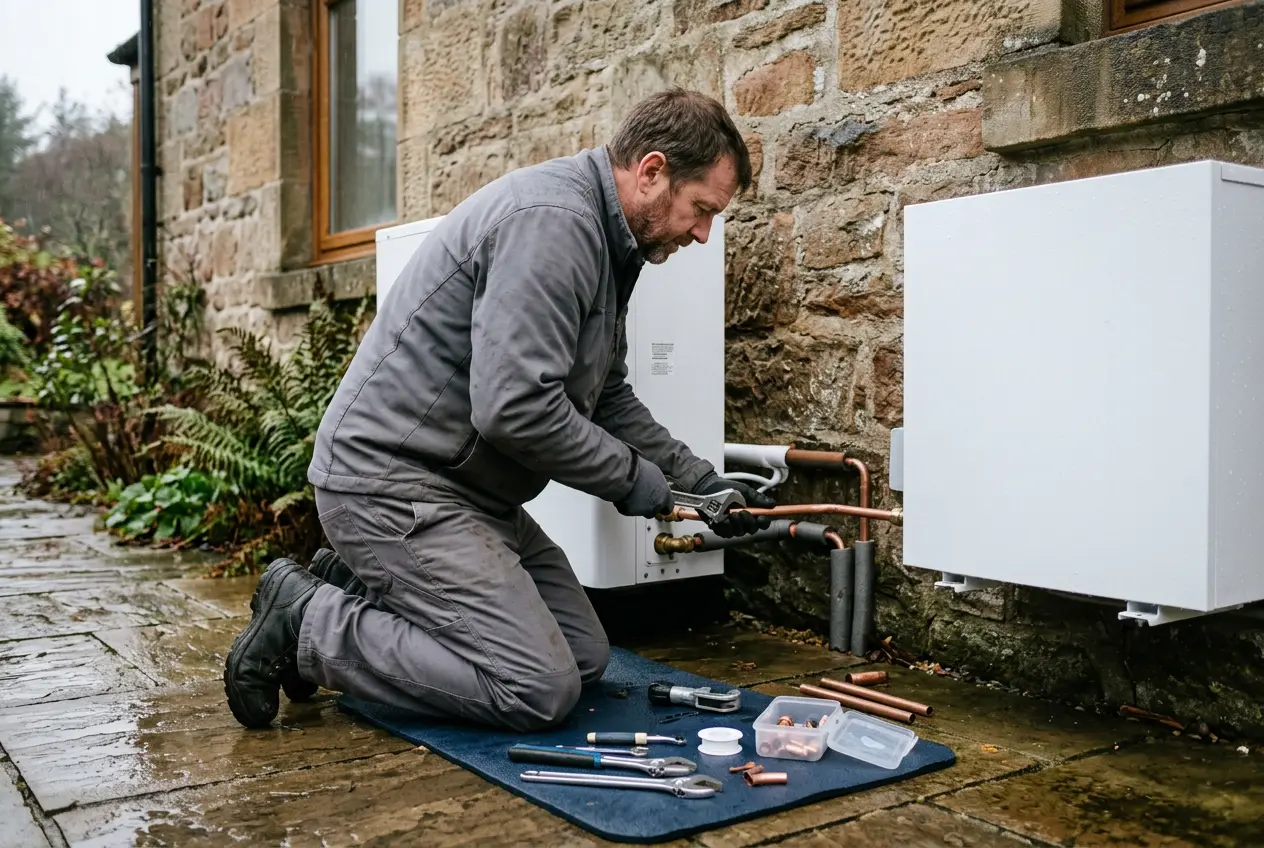
Even cold air holds heat. The outdoor unit passes air over a coil containing refrigerant, which absorbs that heat and boils at a very low temperature. A compressor then squeezes the refrigerant, raising its temperature, and that heat is passed to the water in your heating system and hot water cylinder.
Because it moves heat rather than burning fuel to make it, a heat pump can deliver several units of heat for each unit of electricity it uses. It works best at lower water temperatures, which is why correct sizing, suitable radiators and a properly set flow temperature matter so much.
Every part below should be named and specified on your quotation.
Sits on a base or wall bracket outside. A fan draws air across a coil, and a refrigerant circuit and compressor raise the heat to a useful temperature for your heating water.
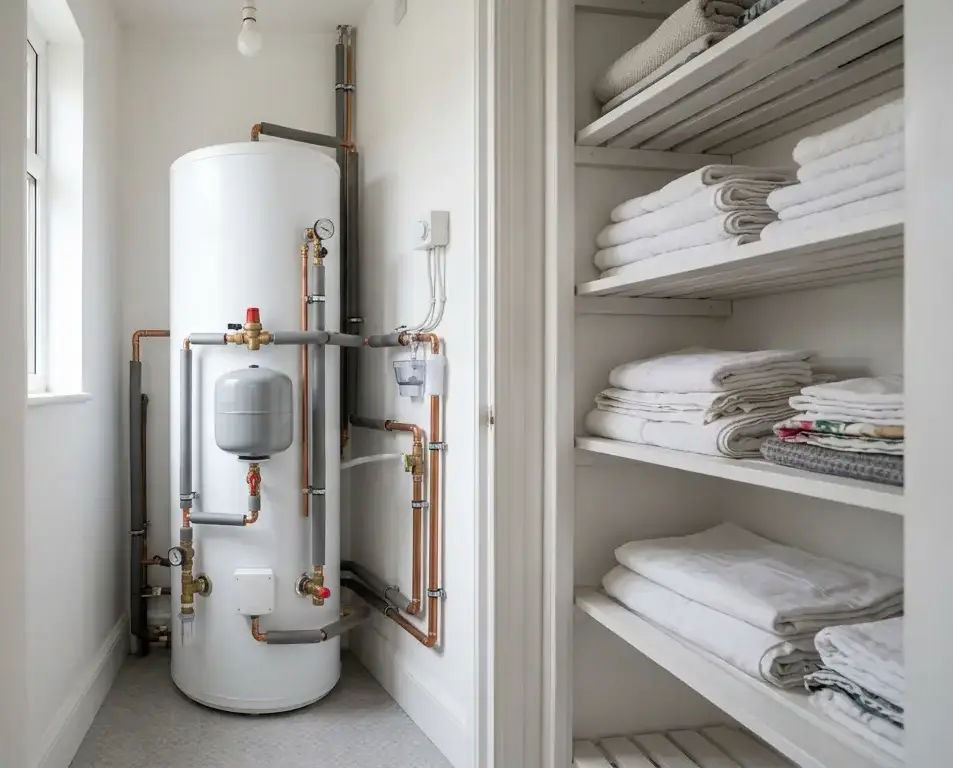
A cylinder designed for a heat pump, with a larger internal coil so it can heat water at lower temperatures. It usually goes in an airing cupboard, loft space or utility room.
Existing radiators are kept where they are big enough. Others are replaced with larger ones so each room reaches temperature with cooler water, as set out in the emitter schedule.
A controller and room thermostat, set up with weather compensation so the water temperature rises only as the weather gets colder. This is what keeps running costs down.
A dedicated circuit from your consumer unit to the heat pump. Some homes need an upgraded consumer unit, and the local network operator is notified of the new load.
Commissioning records, the MCS certificate, manufacturer warranty registration and a handover pack explaining how to use and look after your system.
A surveyor visits and measures each room, its walls, windows, floors and ceilings, and notes insulation and construction. They also look at where the outdoor unit and cylinder could go and check the electrics.
The survey becomes a room-by-room heat loss calculation. From it come the heat pump size, the design flow temperature, the emitter schedule and the cylinder choice. You receive all of this in writing with an itemised price and a list of exclusions.
Permitted development and any planning or listed building questions are checked, and the network operator is notified, before installation begins.
The outdoor unit is positioned and connected, the cylinder is fitted, radiators are changed where needed and the electrical work is completed. The old boiler, tank or heaters are removed if that is part of the quotation.
The system is filled, tested and set to the design flow temperature with weather compensation. You are shown how to use the controls and given your paperwork, including the MCS certificate.
A heat pump runs for longer at a lower temperature than a boiler, keeping rooms steadily warm rather than heating them in bursts. An annual service keeps it running as designed.
We install through MCS-certified partners. The partner fitting your system is the company named on your MCS certificate.
For properties without mains gas, heating off-grid Scottish homes is covered in depth by a site in our network. Remote and rural setups have their own considerations, and heat pumps for rural and remote properties goes into those in detail. Part of the Scottish Energy Efficiency network.
A typical installation takes two to four working days, depending on how many radiators change, whether the cylinder needs a new location, pipe runs and electrical work. Your quotation states the expected number of days.
Your quotation should say. Most installers aim to restore heating and hot water each evening, but this depends on the scope of work. If the old system has to be disconnected for a period, the quotation should tell you in advance.
Commissioning records, the MCS certificate, manufacturer warranty registration and a handover pack explaining how to use and maintain the system. The MCS certificate is your proof that the installation meets the required standard.
If removal is included in the quotation, yes. The old boiler, oil tank or storage heaters should be decommissioned and removed as part of the work. Check that this is listed rather than assumed.
The installer sets the system to its design flow temperature, configures weather compensation, shows you how to use the controls and gives you the paperwork. You should feel confident operating the system before they leave.
Yes, an annual service keeps the system running efficiently and maintains the manufacturer warranty. The service checks refrigerant levels, filters, electrical connections and control settings.
Reviewed by the Scottish Energy Efficiency team.
Fill in the form and we will send you a complete quotation — one that passes the six-line test. No obligation, no sales calls, no pressure.