
For farms and rural estates
Replace oil or LPG with a heat pump sized from a proper heat loss survey. Large roof areas can host solar to cut running costs further.
Quick answer
A proper heat pump quotation in Scotland needs six things: a room-by-room heat loss calculation, a stated design flow temperature, an emitter schedule, the hot water arrangement, the MCS number of the actual installer, and a clear list of exclusions. If any are missing, you cannot compare quotes like for like.
Six things have to be in a heat pump quotation before it means anything. Most of the ones people send us are missing four of them.
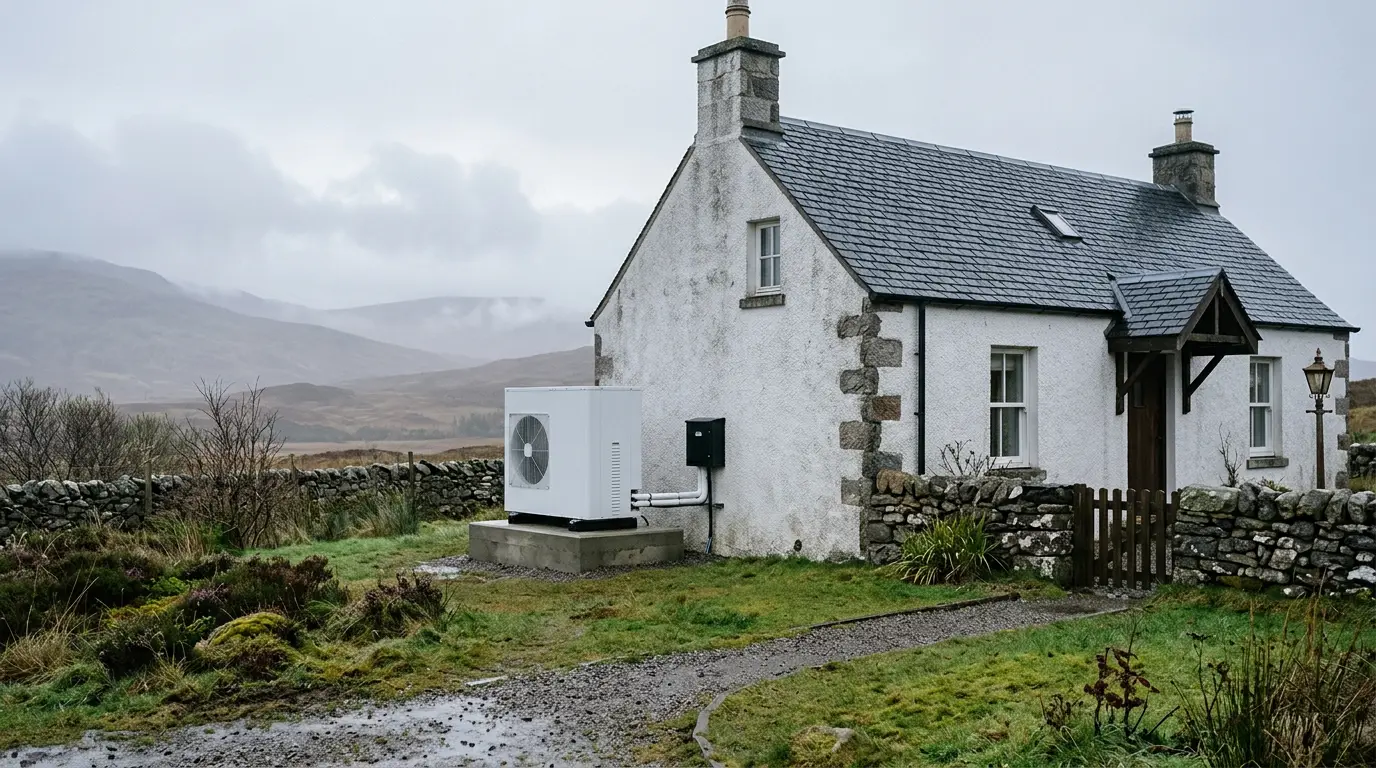
Compare like for like
Every quote we arrange is built on a room-by-room heat loss calculation.
If your property has no mains gas, homes without a mains gas supply are covered in depth by a site in our network. For help with payments, paying monthly with interest-free credit is explained on a dedicated finance site. Remote properties have their own setup considerations, and heating rural and remote properties covers those in detail. Part of the Scottish Energy Efficiency network.
Fill in the form and we will send you a complete quotation — one that passes the six-line test. No obligation, no sales calls, no pressure.
A proper heat pump quotation in Scotland needs a room-by-room heat loss calculation, a stated design flow temperature, an emitter schedule, the hot water arrangement, the MCS certification number of the actual installer, and a clear list of what is excluded. If any of those six are missing, the quotation is not complete and you cannot compare it like for like.
Six things, each testable. Apply this to any quotation you receive — ours included. If one is missing, ask why before you commit.

Not a floor area, not a rule of thumb, not the size of the old boiler. Without this nothing else on the quotation can be trusted.
Not described in words, not a range. The number determines your running cost and which emitters need changing.
Every radiator in every room accounted for. If the quotation does not list them, the price is not finished.
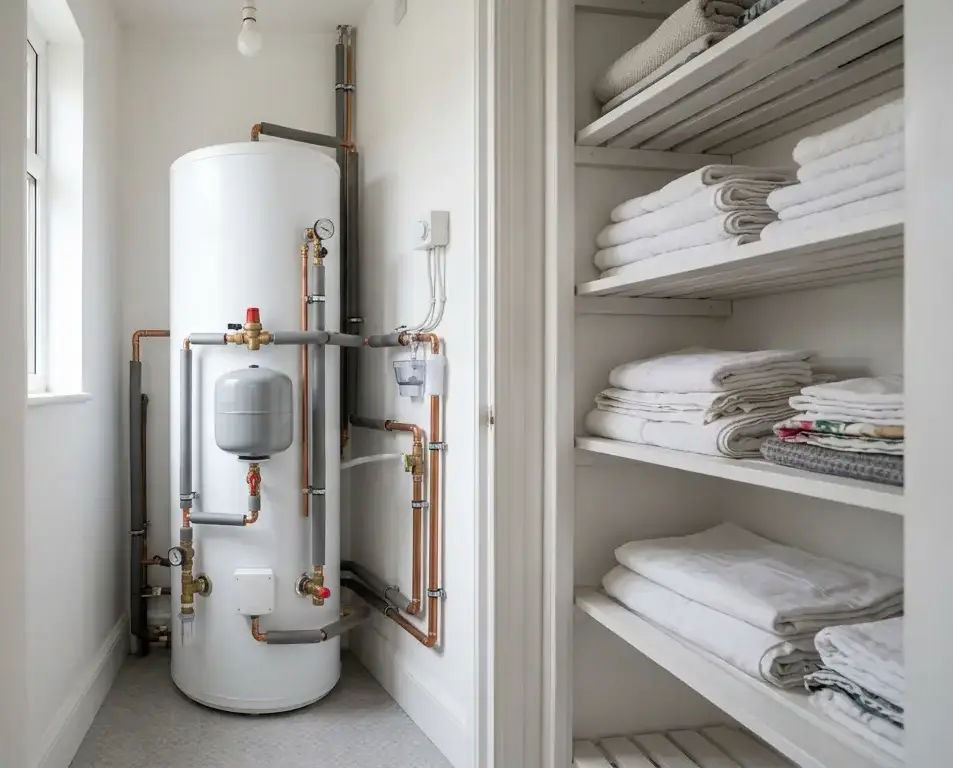
A heat pump needs a hot water cylinder. Its size, location and pipework must be specified, not left to chance.
And whether that is the same company whose name is on the quotation. If it is not, you need to know before you sign.
Scaffolding, electrical upgrades, upgrades to pipework, making good after the work. If it is not listed, it is not included.
If a quotation cannot show you the heat loss, it cannot show you the running cost either.
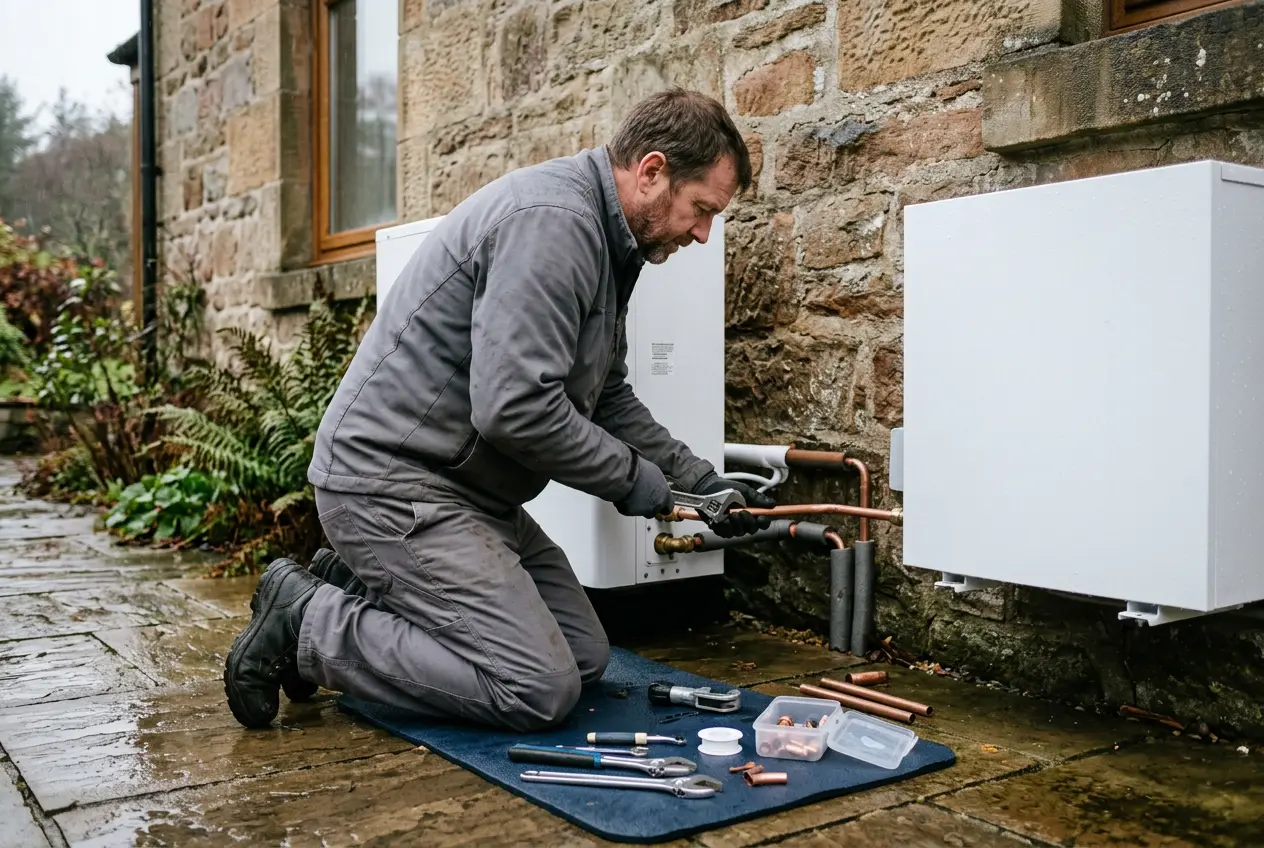
Three steps, no obligation. You send your details, we assess your property honestly, and you receive a quotation that passes the six-line test.
Fill in the form with your postcode, property type and current monthly bill. It takes under two minutes and there is no obligation.
We look at your property, your current heating system and your insulation. If a heat pump is not the right answer for you, we will say so before we quote.
A quotation that passes the six-line test: heat loss calculation, flow temperature, emitter schedule, hot water arrangement, MCS certification and exclusions — all in writing.
Everything on the six-line test, itemised and in writing. No vague language, no missing sections, no surprises after you sign.
If your house is not insulated to a reasonable standard, no heat pump quotation will give you a happy answer and the honest first job is the fabric. If you are on mains gas with a boiler in good health, the arithmetic is much harder and we will say so.
We would rather tell you this now than after you have spent money on a survey. A quotation that is not honest about your property is not worth the paper it is printed on.

Five questions that separate a real quotation from a sales pitch. Ask them of any installer, including us. If you do not get straight answers, walk away.

We install through MCS-certified partners. The partner who fits your system is the company named on your MCS certificate, and their certification number appears on your quotation.
We install through MCS-certified partners who are TrustMark registered. The registration is theirs, and we attribute it accordingly on your quotation.
Yes. The guarantee is insurance-backed through our MCS-certified installation partner, and it survives the partner ceasing to trade. Ask us to confirm the specific terms in writing on your quotation.
It depends on your property. What matters is that it is stated explicitly in the quotation — included or excluded — so the price you see is the price you pay.
We install through MCS-certified partners. The partner who fits your system is the company whose name appears on the MCS certificate.
We arrange heat pump, solar and battery quotations for Scottish farms, holiday lets, hotels, offices and community buildings. Interest-free credit up to £30,000, subject to status.
Replace oil or LPG with a heat pump sized from a proper heat loss survey. Large roof areas can host solar to cut running costs further.
Reliable heat and hot water for guests, with lower running costs than oil or LPG. A cascade system handles high demand efficiently.
Zoned heating around occupied hours, with weather compensation and smart controls to keep running costs down.
Straight answers to the questions we hear most often from homeowners across Scotland.

A complete quote names the heat pump model and output, shows a room-by-room heat loss calculation, states the design flow temperature, lists every radiator that stays or changes, specifies the hot water cylinder, gives the installer's MCS number and sets out exclusions. It should also itemise the price, so you can compare quotes line by line.
Quotes vary because installers size systems differently, include different amounts of radiator and pipework change, choose different cylinders, and treat items like scaffolding, electrical upgrades and making good in different ways. Some quotes leave these out entirely. When each quote is built on a proper heat loss calculation and lists its exclusions, the differences become much easier to explain.
A surveyor visits your home and measures each room, its windows, walls, floors and ceilings, and notes insulation levels and how the property is built. Those details go into a room-by-room calculation of how much heat each space loses on a cold day. The result sets the heat pump size, flow temperature and any radiator changes.
It depends on your home, your current fuel and your energy tariff. Heat pumps are much more efficient than boilers, but electricity usually costs more per unit than gas. Compared with oil or LPG, running costs are often lower. A proper quote should estimate running costs from your own heat loss figures, not general averages.
Most Scottish homes can take a heat pump, but suitability depends on your heat loss, insulation, radiator sizes, space for a cylinder and where the outdoor unit can go. A surveyor checks all of this at your home. If a heat pump is not the right choice, we will tell you honestly rather than try to sell you one.
Time on site depends on how many radiators change, whether the cylinder needs a new location, pipe runs and electrical work. A typical installation takes two to four working days. Your quotation should state the expected number of days and whether you will have heating and hot water each evening.
A heat loss calculation, a stated design flow temperature, an emitter schedule, the hot water arrangement, the installer's MCS number, and a list of what is excluded. Six things, minimum.
These six items are the minimum standard for a quotation that you can compare like for like. If any one is missing, you cannot judge whether the price is fair, whether the system will heat your home, or whether the installer is competent. The six-line test on this page explains each one in detail.
Without a room-by-room heat loss calculation, the heat pump size is a guess. Every running cost claim and every comfort promise depends on that figure being correct.
A heat loss calculation measures how much heat each room loses on the coldest day of the year. It tells the installer what size heat pump you need and what flow temperature it must run at. Without it, the system may be oversized, undersized, or set to run at a temperature that costs you more than it should. No calculation, no trustworthy price.
The design flow temperature is the water temperature sent to your radiators on the coldest day. Lower is more efficient. It must be stated as a number, not words.
Heat pumps run more efficiently at lower flow temperatures. A quotation that says "low flow temperature" without a number is not telling you what you need to know. The number should be specific — for example, 45°C or 50°C — and it should be paired with the heat loss calculation so you can see it is sufficient for your home.
Yes. MCS is the minimum standard for a competent heat pump installation in Scotland. The MCS number on your quotation must match the company doing the work.
MCS certification means the installer has been assessed against a recognised standard for heat pump design and installation. The MCS number must belong to the company doing the work, not a parent company or a partner. On your quotation, check that the name on the MCS certificate matches the name of the company you are contracting with.
Zero percent VAT on qualifying domestic heat pump installations until 31 March 2027, under HMRC rules. This is a tax change that applies UK-wide.
The zero-rate VAT on domestic heat pump installations was introduced by HMRC and runs until 31 March 2027. It applies to the installation of heat pumps and any ancillary work needed to make the system function. The price on your quotation should already reflect it.
You can, but running cost differences are harder when replacing a working gas boiler. An honest installer will tell you the arithmetic is tighter and may not justify it.
Gas is currently a cheaper fuel per kWh than electricity, and heat pumps use electricity. A heat pump can still cost less to run because it is more efficient, but the margin is narrower than for homes on oil, LPG, or direct electric heating. The honest answer depends on your property, your boiler, and your bills — and a quotation that does not address this is not being straight with you.
The Smart Export Guarantee pays roughly 4p to 25p per kWh for exported electricity, depending on supplier. It applies to solar panels, not heat pumps directly.
The Smart Export Guarantee (SEG) is a government scheme that requires electricity suppliers to pay small generators for exported renewable electricity. It applies to solar panels and other microgenerators, not to heat pumps, which consume electricity rather than generate it. However, if you are considering solar alongside a heat pump, the SEG is relevant to the overall financial picture.
Reviewed by the Scottish Energy Efficiency team.