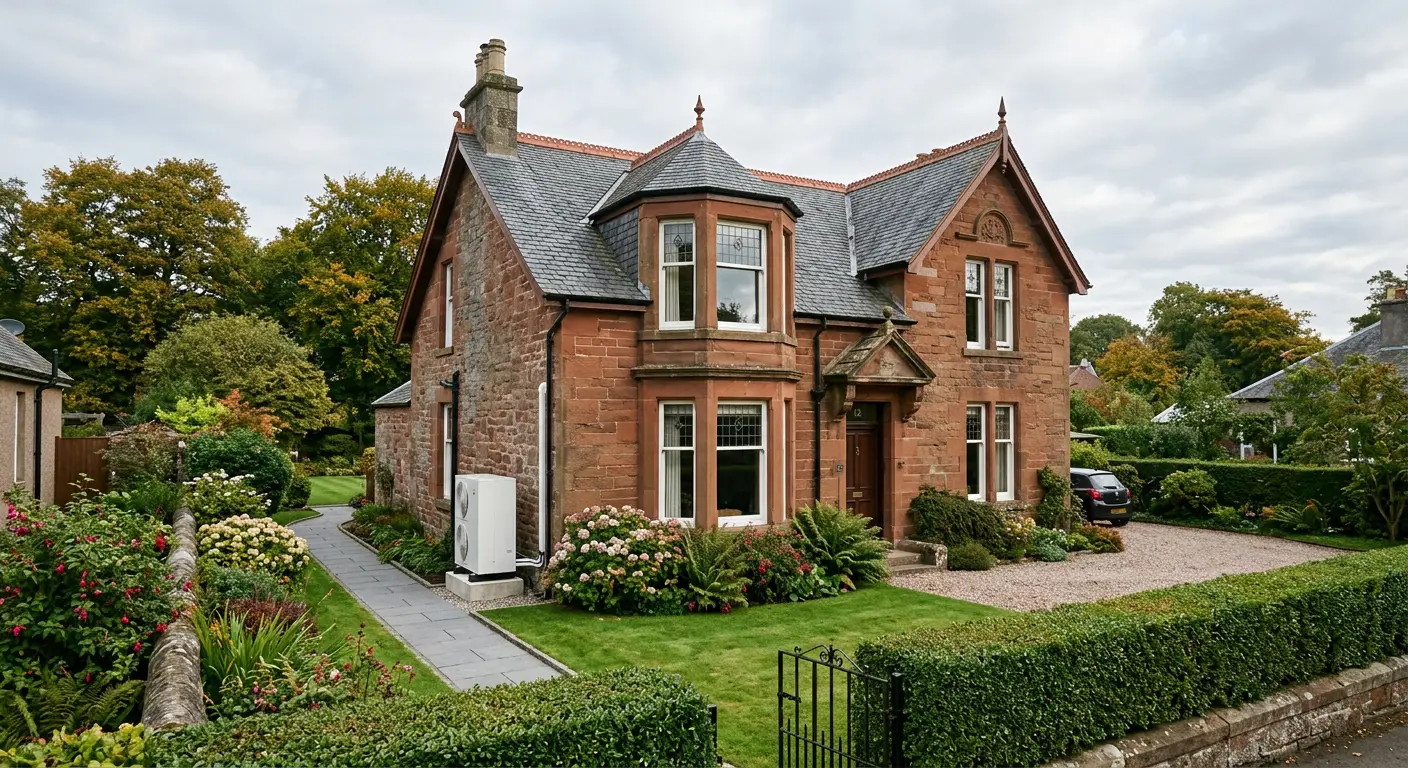
Farms and farmhouses
Replace oil or LPG heating in farmhouses, steadings and outbuildings. Large roof areas suit solar, and heat pumps cut fuel deliveries and tank refills.
Quick answer
We arrange heat pump, solar and battery quotations for Scottish farms, rural estates, holiday lets, hotels, offices, schools and community halls. A proper heat loss survey comes first, then a written quotation with the system specification, MCS number and itemised price. Interest-free credit up to £30,000, subject to status.
Heat pump quotations for Scottish farms, rural estates, holiday lets, hotels, offices, schools, community halls and small industrial units. A proper heat loss survey and written quotation, with interest-free credit up to £30,000, subject to status.

From farmhouses to community halls, the same principle applies: a heat loss survey first, then a written quotation you can compare.
Replace oil or LPG heating in farmhouses, steadings and outbuildings. Large roof areas suit solar, and heat pumps cut fuel deliveries and tank refills.
Estate buildings with mixed use — cottages, workshops and offices — benefit from a zoned heat loss survey that sizes each space correctly.
Guests expect reliable heat and hot water. A properly sized heat pump with a matched cylinder delivers both, with lower running costs than oil or LPG.
Hotels have high hot water demand and variable occupancy. A cascade heat pump system with a large cylinder and smart controls handles both efficiently.
Offices need heating around occupied hours, not all day. Zoning and weather compensation keep running costs down while maintaining comfort.
Schools and nurseries need consistent, safe heating. A heat pump with a design flow temperature matched to existing radiators minimises disruption.
High-cefted, intermittently used buildings are challenging but not impossible. A proper heat loss survey determines whether a heat pump can work cost-effectively.
Workshops and light industrial units on oil or direct electric heating are strong candidates. The survey covers electrical supply capacity and unit positioning.
Every system is sized from a heat loss calculation, not floor area or the old boiler rating.
Single units for smaller buildings, or cascade systems with multiple outdoor units for larger ones. Each is sized from a zone-by-zone heat loss calculation.
Two or more heat pumps working together for buildings with high heat demand. Cascade controls rotate lead and lag units to extend lifespan and improve efficiency.
A heat pump paired with an existing boiler for buildings where a full replacement is not practical. The system uses the heat pump as the primary source and the boiler as backup.
Commercial-grade cylinders sized to peak demand, whether that is a guest house at full occupancy or an office at morning start-up. The cylinder spec appears on every quotation.
Rooftop or ground-mount solar generates electricity the heat pump can use during the day, cutting running costs. The survey covers roof loadings, orientation and grid connection.
A battery stores cheap-rate or solar electricity for use when the heat pump is running hardest. The quotation specifies capacity, inverter sizing and how it integrates with your supply.
No two commercial properties have the same running costs. These are the factors that decide yours.
The heat loss calculation sets the heat pump size and flow temperature. A well-insulated building needs less output and costs less to run.
Insulation, draught-proofing and glazing all reduce heat demand. A survey identifies where improvements would lower running costs before a heat pump is sized.
Lower flow temperatures mean lower running costs. The surveyor balances flow temperature against emitter capacity to find the most efficient operating point.
Replacing oil or LPG usually lowers running costs. Replacing mains gas is harder to justify on running costs alone. The quotation compares both using your own figures.
Your tariff sets the unit cost of running the heat pump. Time-of-use tariffs pair well with battery storage to shift consumption to cheaper periods.
Solar PV generates electricity the heat pump can use, reducing the amount you buy from the grid. A battery extends that benefit into the evening and overnight.
A surveyor visits your premises, measures heated areas, checks insulation and the existing heating plant, and assesses electrical supply and access. For farms, this includes roof area and orientation for solar.
From the survey data comes a written quotation with a zone-by-zone heat loss calculation, the recommended system specification, any infrastructure work needed, and an itemised price. The MCS number of the installation partner appears on every quote.
The installation is carried out by an MCS-certified partner. Their name and certification number appear on your quotation and your MCS certificate. We coordinate the project so you deal with one point of contact.
After handover, the system is commissioned to its design flow temperature, weather compensation is configured, and you receive commissioning records, warranty registration and a handover pack. Annual servicing keeps the warranty valid.
Interest-free credit up to £30,000, subject to status. We can discuss options as part of your quotation, so you can see the full installation cost and any finance terms before you commit. The quotation always shows the total price separately from any finance arrangement.
Tell us about your premises and we will arrange a no-obligation site survey and written quotation.
Yes. A heat pump sized from a room-by-room heat loss calculation handles farmhouses, converted steadings and outbuildings. Replacing oil or LPG usually lowers running costs, and large roof areas can host solar to offset electricity use.
A cascade system uses two or more heat pumps working together for buildings with high heat demand. The controls rotate which unit leads, extending lifespan and improving efficiency at part-load. It suits hotels, large offices and industrial units.
Yes, and running costs are often lower. The survey compares your current fuel costs against projected electricity costs using your own heat loss figures, not generic averages. Removing the oil tank and decommissioning the old boiler should be listed on the quotation.
Commercial installations may need planning permission where domestic ones do not. Listed buildings, conservation areas and larger outdoor units all trigger checks. The survey identifies what applies to your site before any quotation is issued.
Interest-free credit up to £30,000, subject to status. We can discuss options as part of your quotation. The total installation price is always shown separately from any finance arrangement.
Reviewed by the Scottish Energy Efficiency team.
Fill in the form and we will send you a complete quotation — one that passes the six-line test. No obligation, no sales calls, no pressure.