Heat pump questions, answered plainly

Quick answer

These are the questions Scottish homeowners ask most about air source heat pumps: sizing, radiators, noise, planning, cold weather performance, hot water and what a proper quotation should contain. Each answer is direct and based on how heat pumps actually work in Scottish homes.

Short, direct answers to the questions Scottish homeowners ask most about air source heat pumps, from sizing and radiators to planning, cold weather and what a quotation should contain.

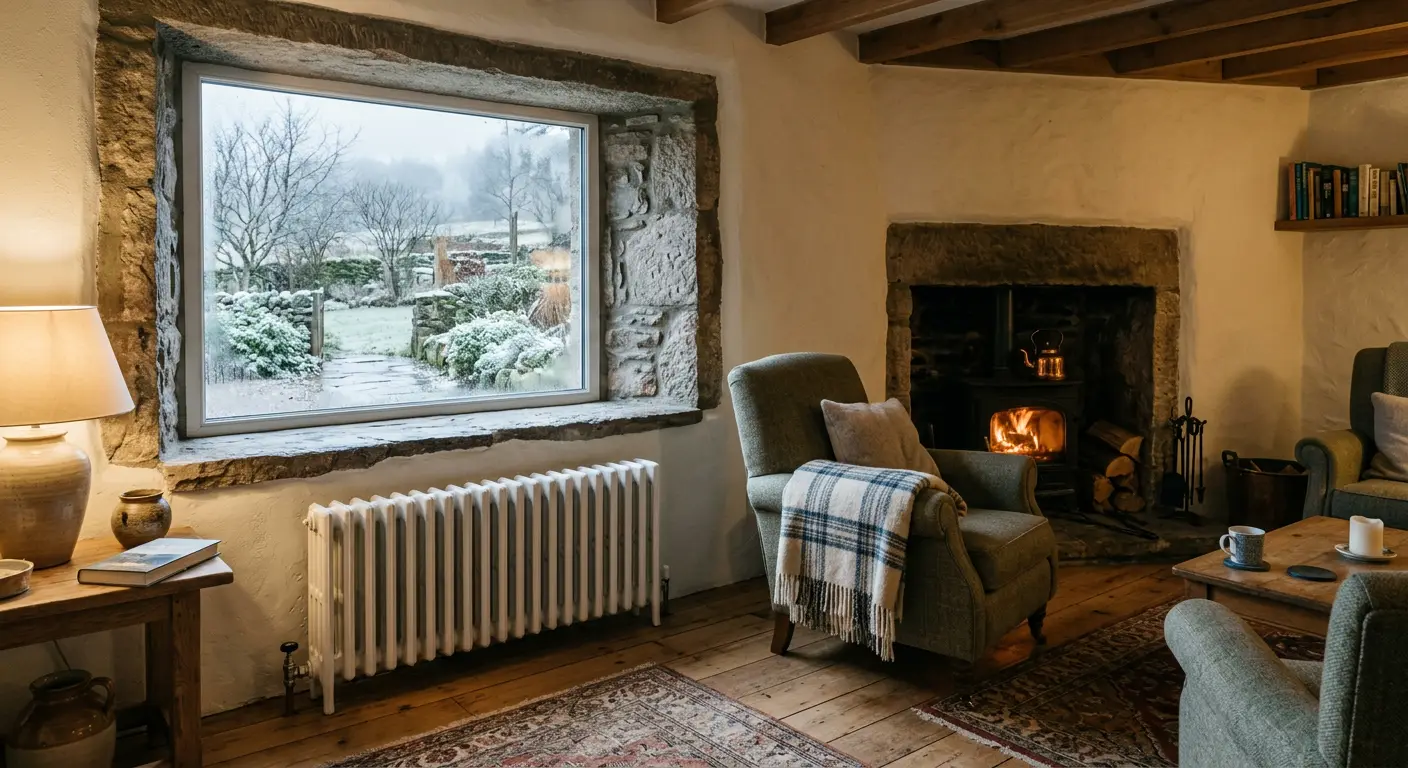
Cast iron radiator under a stone-framed window in a Scottish cottage living room on a snowy day

What homeowners ask us most

What size heat pump does my home need?

The right size comes from a room-by-room heat loss calculation, not floor area or the size of your old boiler. The surveyor works out how much heat each room loses on a cold Scottish day, adds hot water demand, and chooses a heat pump whose output covers that total without being oversized.
Will I need to replace my radiators?

Not always. Heat pumps run best at lower water temperatures, so some radiators may need to be larger to warm the room. Your emitter schedule should list every radiator, say whether it stays or changes, and explain why. The survey decides this room by room, so there is no need to guess in advance.

Do air source heat pumps work in a Scottish winter?

Yes. Air source heat pumps extract heat from outdoor air even well below freezing. What matters is that the system is designed for your local cold-day temperature, which is lower in the Highlands than on the Clyde coast. A correctly sized pump with suitable radiators keeps the house warm through a normal Scottish winter.

How noisy is an air source heat pump?

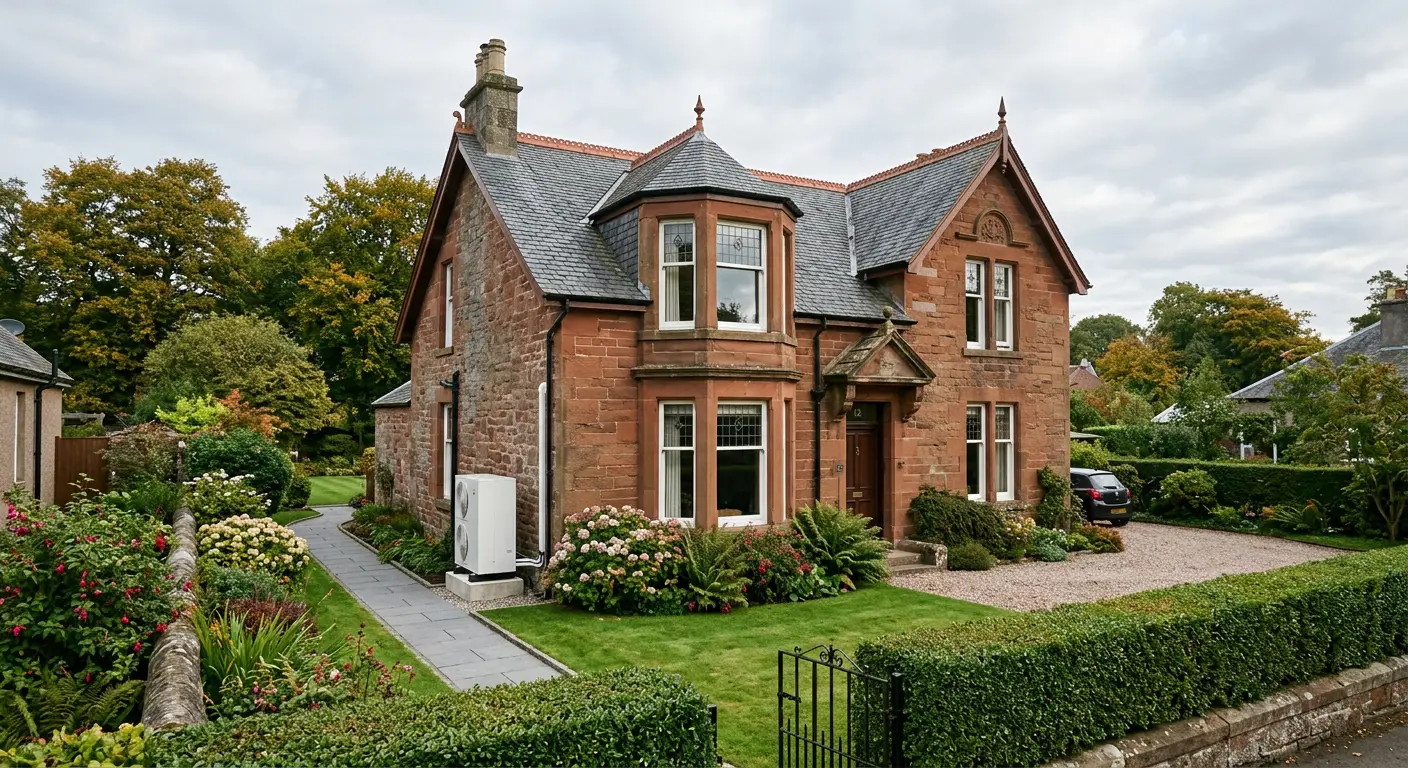
A modern outdoor unit makes a steady low hum, with the fan and compressor most noticeable when it is working hard on cold days. Siting matters more than anything: the surveyor should keep it away from bedroom windows and neighbours' boundaries and check it against the noise limits that apply under permitted development.

Do I need planning permission for a heat pump in Scotland?

Many installations are permitted development in Scotland, so no planning application is needed, but conditions apply on position, size and noise. Listed buildings, flats, conservation areas and units close to a boundary may need permission. Your installer should check this before work starts and tell you in writing if an application is required.

Do I need a hot water cylinder?

Yes, in almost every case. A heat pump heats water more gently than a combi boiler, so it needs a stored hot water cylinder sized to your household. If you have a combi now, the quotation should show where the cylinder will go, its size, and any pipework or space changes needed to fit it.

Can a heat pump replace oil or LPG heating?

Yes. Off-gas homes on oil, LPG or electric storage heaters are often well suited to an air source heat pump, especially in rural Scotland. The quotation should cover removing or decommissioning the old boiler and tank, and compare running costs using your own heat loss figures rather than general averages.

How long does a heat pump installation take?

The time on site depends on how many radiators change, whether the cylinder needs a new location, how long the pipe runs are and whether electrical work is needed. Your quotation should state the expected number of days, which rooms will be disrupted, and whether you will have heating and hot water each evening.

Can I get a heat pump in a tenement flat?

Sometimes. The main questions are where the outdoor unit can go, whether you need agreement from other owners for a shared wall or back green, and whether planning permission is needed. Some flats suit a heat pump well; others do not. A survey answers this quickly, and we will tell you honestly if it is not suitable.

Who carries out the installation?

We install through MCS-certified partners. The partner who fits your system is the company named on your MCS certificate, and their certification number should appear on your quotation. That certificate matters: it is your proof that the system was designed and commissioned to the required standard.

What should a heat pump quotation include?

A complete quotation shows a room-by-room heat loss calculation, the design flow temperature, an emitter schedule listing every radiator, the hot water cylinder size and position, the installer's MCS number, and a clear list of exclusions such as scaffolding or electrical upgrades. It should also itemise the price so you can compare quotes fairly.

What VAT rate applies to heat pump installation in Scotland?

Zero percent VAT on qualifying domestic heat pump installations until 31 March 2027, under HMRC rules. This is a tax change that applies UK-wide, and the price on your quotation should already reflect it.

Want more detail on prices? Read what decides the cost of a heat pump or how an installation works.

Reviewed by the Scottish Energy Efficiency team.

Ready to get your heat pump quotation?

Fill in the form and we will send you a complete quotation — one that passes the six-line test. No obligation, no sales calls, no pressure.

Request your quotation

All fields are required.

Enquiry type

By submitting this form you agree to be contacted by Heat Pump Quotes Scotland, a trading name of Scot Energy Efficiency Ltd (company number 17408629), about your enquiry.

Privacy Policy · Cookie Policy

Last updated: 28 October 2026